Are you concerned that your property may soon fall below the minimum acceptable Energy Performance Certificate (EPC rating) threshold and become difficult to sell or to let in the future? Are you factoring in the risk that, within a few years, assets that do not meet tightening standards will struggle to sell or require costly retrofits? Are you already facing issues such as mould, condensation, or poor ventilation within your portfolio of properties? Or encountering delays in planning approvals due to increasing expectations around sustainability and occupant well-being?
These are no longer isolated technical issues; they are converging into a single systemic risk. What sits at the centre of all of them is not just design, not only regulation, but also material choice, construction details and building performance. The materials used in insulation, finishes, and construction detailing directly influence energy performance, indoor air quality, and long-term durability. And critically, the party with the greatest control over those choices is not only the architect or other consultants, but also the property owners.
The industry is moving beyond a phase where minimum compliance can safeguard asset performance. Buildings delivered without a rigorous understanding of thermal behaviour, environmental conditions, and occupant health are increasingly exposed to obsolescence, regulatory risk, and declining market appeal. In contrast, assets realised with an integrated performance strategy from the outset, combining robust fabric, appropriate materials, and effective building systems, demonstrate greater resilience, stronger demand, and more stable long-term value.
Material Choice and Health: Living Conditions
The built environment is not passive; it actively shapes the conditions in which people live, work, and spend prolonged periods of time, continuously influencing health, comfort, and overall well-being. S!
 With individuals spending approximately 90% of their time indoors, indoor air and environmental quality have become the most critical factors in building performance. However, it is not just about the air people breathe. Temperature stability, humidity control, and the prevention of mould are equally fundamental in shaping a healthy indoor environment. A building that fails to balance these elements may meet energy targets on paper, yet perform poorly in practice, compromising occupant well-being and long-term asset value.
A significant contributor to indoor air quality is the emission of Volatile Organic Compounds (VOCs) from common construction materials. Paints, adhesives, sealants, engineered timber products, and certain insulation systems can release chemical pollutants into the indoor environment, particularly in the period following installation. In poorly ventilated spaces, these emissions accumulate, contributing to respiratory irritation, fatigue, and longer-term health concerns. While low-emission alternatives are available, they are not always prioritised in cost-driven procurement processes.
Insulation, often positioned as a key sustainability measure, introduces a more complex dynamic. Improved air tightness is essential for achieving higher energy performance (EPC ratings) and reducing energy consumption. However, when air tightness is not integrated with appropriate ventilation strategies, it can restrict airflow and trap indoor pollutants such as CO₂ and Volatile Organic Compounds (VOCs).
This creates environments that may meet energy targets but fail in terms of occupant health. In the UK, this risk is explicitly recognised within the regulatory framework: Approved Document F of the Building Regulations sets minimum requirements for ventilation to ensure adequate indoor air quality.
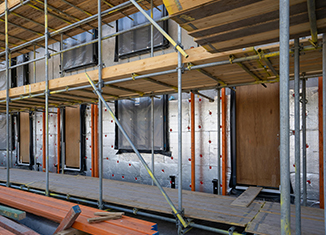
Equally important is the risk of moisture accumulation. Improperly selected or poorly installed insulation can trap moisture within the building envelope, leading to condensation and, over time, mould growth. The implications are both health-related and financial. Mould exposure has been linked to respiratory conditions and allergic reactions, while remediation can be disruptive and costly.
Evidence highlights several key considerations in this context: enhanced air tightness without ventilation can trap pollutants; certain insulation materials may emit chemical contaminants shortly after installation; and inadequate detailing can lead to moisture retention and microbial growth.
Natural materials such as sheep wool or timber-based insulation are increasingly being explored as alternatives that may enhance better indoor air quality, but their performance is dependent on correct integration and installation within the building system.
Mitigation strategies are well understood but inconsistently applied. Systems like Mechanical Ventilation with Heat Recovery (MVHR) are widely recognised as essential in airtight buildings, ensuring a continuous supply of fresh air while maintaining energy efficiency. Proper installation of insulation, minimising thermal bridges, and selecting low-emission materials are equally critical. These measures are not optional; they are fundamental to delivering buildings that perform.
There is also a broader context to consider. Studies examining indoor occupational environments have identified measurable declines in lung function over time where air quality is compromised. While often associated with cleaning agents, these findings reinforce a key point: indoor environments can concentrate exposure to airborne contaminants. Material selection plays a direct role in defining that baseline exposure.
Natural materials, such as timber, natural stone, and lime-based finishes, offer an alternative approach. They tend to emit fewer harmful compounds and can contribute to more stable humidity levels. While not universally applicable, their strategic use can enhance indoor environmental quality. At the same time, occupant awareness is increasing. Health is no longer a secondary concern; it is becoming a primary expectation.
The Decision-Makers Behind Building Performance
Despite the technical nature of these issues, the decisive factor is commercial. Material performance is not determined only in drawings and specifications, it is determined through procurement, value engineering, and delivery. This is where developers hold the greatest influence.
Consultants have the expertise and responsibility to advise, challenge, and guide the building owner towards appropriate material and design decisions. They can identify risks, propose solutions, and set out the implications of different approaches. However, the final decision ultimately rests with the developer. With that decision-making power comes a clear duty: to make informed choices that ensure the building performs as intended, meets regulatory requirements, and protects the long-term value of the asset.
 This has direct implications in the current regulatory environment. In the UK, EPC requirements are tightening, and properties that fall below minimum thresholds risk becoming neither rentable nor, increasingly, attractive to buyers, effectively limiting their marketability and long-term market value.
However, compliance with EPC requirements alone does not guarantee performance. A building can achieve a high EPC rating while still suffering from poor ventilation, condensation, or indoor air quality issues. These problems translate into operational costs, tenant dissatisfaction, and potential legal exposure. Developers who focus solely on compliance metrics without addressing underlying performance are effectively deferring risk.
Statutory authorities are also evolving. There is increasing demand not only on design intent, but on how buildings will perform in use, particularly in relation to ventilation, daylight, and material quality. Schemes that demonstrate a clear, integrated approach to sustainability and occupant well-being are more likely to secure consent efficiently, with reduced conditions and fewer approval delays.
From a supply chain perspective, developers have the ability to influence market behaviour. By specifying low-emission materials and prioritising performance-led procurement, they can drive demand and encourage innovation. This is particularly significant for developers operating at scale, where repeated specification can standardise higher performance across multiple projects.
Market expectations are shifting in parallel. Occupants are becoming more aware of indoor environmental quality, even if they do not express it in technical terms. Comfort, air quality, and the absence of defects are increasingly expected as standard. Developments that fail to meet these expectations risk higher turnover, reputational damage, and reduced asset value. Those that exceed them are better positioned not only to attract and retain tenants, but also to secure higher-quality tenants or buyers, strengthening both rental performance and long-term capital value, whether held as an income-generating asset or sold at a later stage.
How to Get It Right from Day One